Published on 23.9.2026
A significant discovery was made on Alppikatu
The world’s most common bleeding disorder was named after its discoverer, Erik von Willebrand. The findings were made at the Deaconess Institute hospital in Helsinki, in the Alppikatu block. The observations were published in 1926. One hundred years ago.
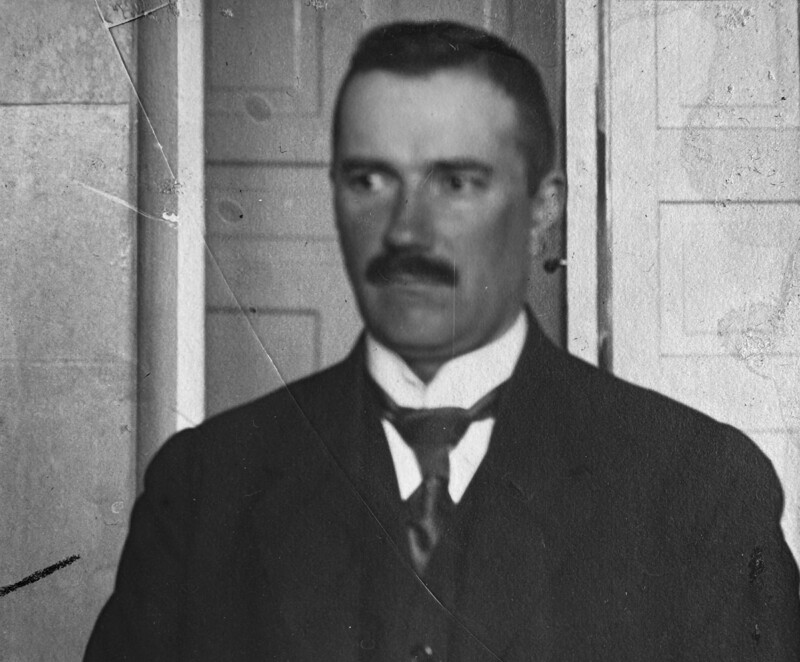
To the Deaconess Institute hospital was brought a 7-year-old Hjördis in the spring of 1924. She came from the Åland island of Föglö and there were many similar symptoms in the family: heavy bleeding, which had already led to the deaths of three siblings. The hospital’s long-time physician Erik von Willebrand became interested in the patient’s symptoms and began to investigate what might be causing them. The result was von Willebrand’s inclusion among the notable names in medicine – von Willebrand disease was identified.
Chief physician sparked interest in blood disorders
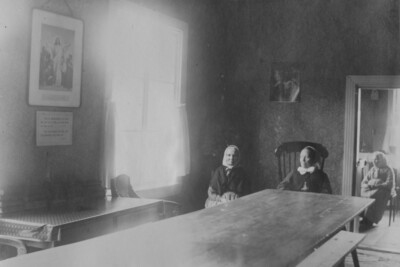
The new hospital of Deaconess Institute was completed in 1897. The hospital had been led since 1893 by Ossian Schauman, who, as the hospital grew in patient numbers, was joined by a colleague, Erik von Willebrand. Von Willebrand, chosen for the assistant physician position, had graduated as a Licentiate of Medicine the previous year. Under the supervision and guidance of Schauman, who studied blood diseases, von Willebrand became interested in hematology and blood disorders, and he began preparing a dissertation on the subject. Von Willebrand defended his doctorate in medicine and surgery in 1899 on changes in the blood caused by venesection.
Von Willebrand worked for nearly his entire career as the chief physician of the largest internal medicine department at Diakonissalaitos hospital and, from 1922 to 1930, also as the hospital’s chief physician. The management duties of the large hospital were probably a burden to him: he found the struggles associated with his position distasteful, and for the sensitive von Willebrand even giving a reprimand to a subordinate caused him distress. He preferred to withdraw to his laboratory to devote himself to research.
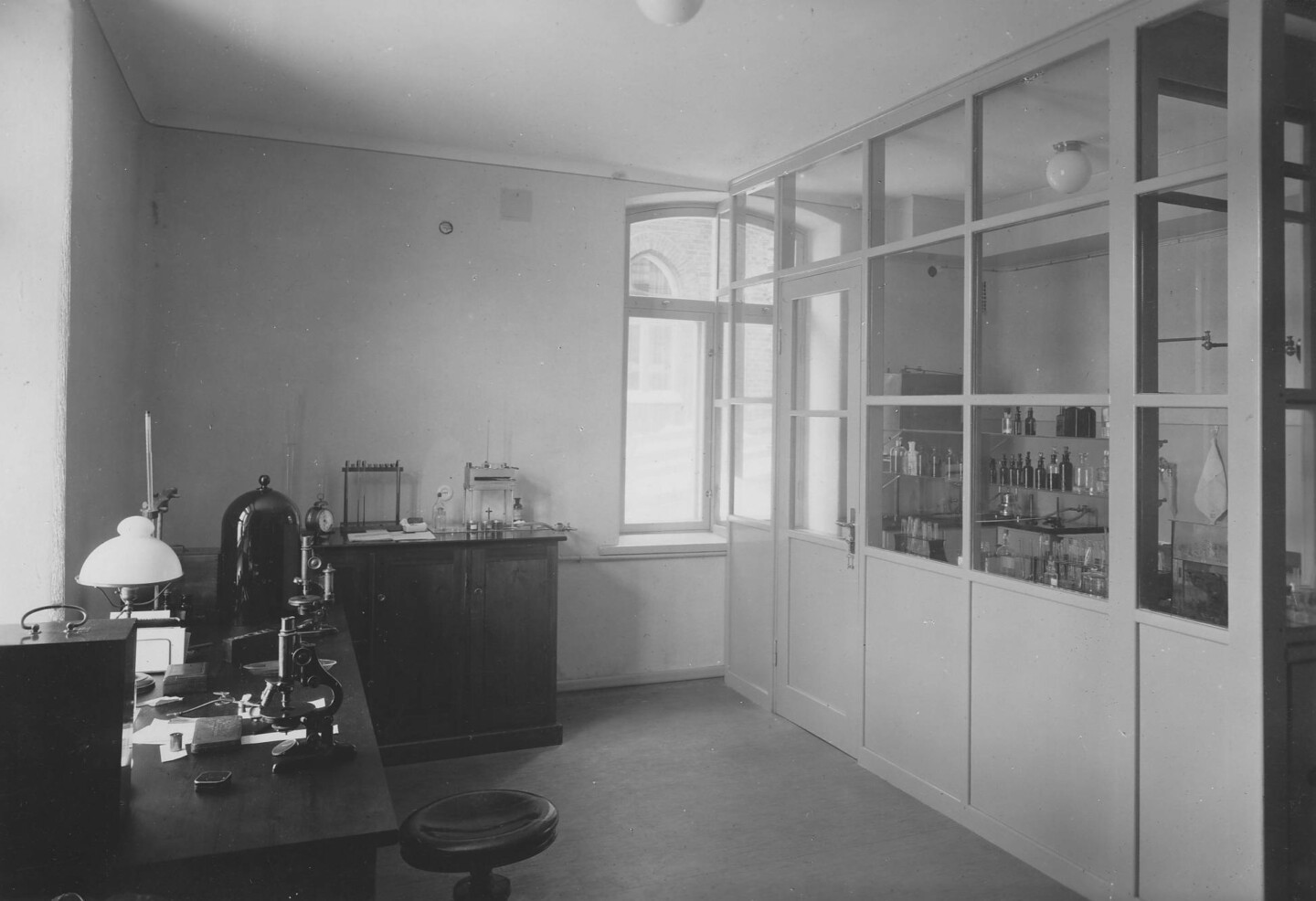
Symptoms are being investigated in the hospital laboratory
He was truly able to get into the laboratory when he began to investigate 7-year-old Hjördis’s symptoms. As early as one year of age she had fallen and suffered a long-lasting nosebleed, and at three years old a wound that formed on the upper lip caused the child to bleed nearly dry: recovery had required ten weeks of bed rest. In addition, both of Hjördis’s parents and several close relatives had a tendency to similar bleedings. The bleeding had also led to death.
Based on his investigations, von Willebrand concluded that the problem lay in platelet function and bleeding disorders of the walls of small blood vessels. In more detailed studies the mode of inheritance also proved to be different from hemophilia, which is also an inherited bleeding disorder. In 1926 von Willebrand described the patients in the journal Finska Läkaresällskapets Handlingar under the title “Hereditär pseudohemofili”. The same article was also published as an appendix to the Diakonissalaitos hospital’s 1925 annual report.
The Föglö families were re-examined and reports about them were published, partly together with the German hematologist Rudolf Jürgens . He had found a similar patient in his own country. In joint publications that appeared in the 1930s the authors called the disease “constitutional thrombopathy”, to which others soon attached the name pair “von Willebrand-Jürgens”.
The causative factor for von Willebrand disease is found
In 1971, 45 years after the first description of von Willebrand disease, the von Willebrand factor was identified. It is a protein essential for platelet adhesion. As a result of this discovery, Föglö was put on the world map of medical geography, Erik von Willebrand became one of the most renowned Finnish names in medicine, and Finska Lääkaresällskapets Handlingar became a citation classic. The disease’s prevalence placed its discoverer among the great names of medicine: von Willebrand knew how to draw the right conclusions from the observations. Many before him had made similar observations but had either given them little attention or interpreted them incorrectly.
History was made in the Alppikatu block, at the Deaconess Institute hospital.
The author Jaana af Hällström works at Deaconess Foundation as a communications specialist and curator. The source used is the Duodecim journal publication (in Finnish) “Von Willebrand and His Disease” (1992).