Aurora’s Social Activities in Träskända and Hakasalmi
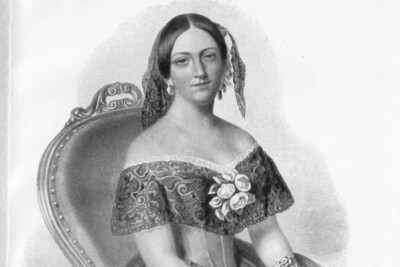
Aurora’s homes, Träskända Manor in Espoo and Hakasalmi Villa on the shore of Töölönlahti were important places for Aurora Karamzin (1808-1902). Both were also connected to her social activities. The Deaconess Foundation has also influenced the Dalsvik Manor that she owned.
Träskända Manor – Aurora’s Paradise
Aurora’s stepfather Carl Walleen bought the Träskända estate from Espoo in 1820 as a summer retreat for his family. He built a new main building on the property. Aurora purchased the estate from her stepfather in 1840 and expanded the main building in 1851–1852. Träskända was a very important place for Aurora. She cherished and developed it with love. The main building was destroyed in a fire in 1888. A few years later, a severe storm destroyed a large part of the magnificent park. Many of the trees had been brought all the way from the Urals. Through these hardships, Aurora believed God wanted to “detach her from the earthly.” Aurora sold the estate in 1895 to her sister’s grandchild Marie and her spouse Adolf Törngren. The current main building was constructed in 1920-1921. The estate is owned by the City of Espoo, which has long been seeking a new use for it.
Many of Aurora’s contemporaries visited Träskända. The most famous among them is Emperor Alexander II, in whose honor a hunting trip organized in 1863 was lavish and unique – that trip is still written about today. Aurora’s era was indeed the most glorious period in the estate’s history.

Social activities in Aurora at Träskända Manor
- School and public library for settlers and local children.
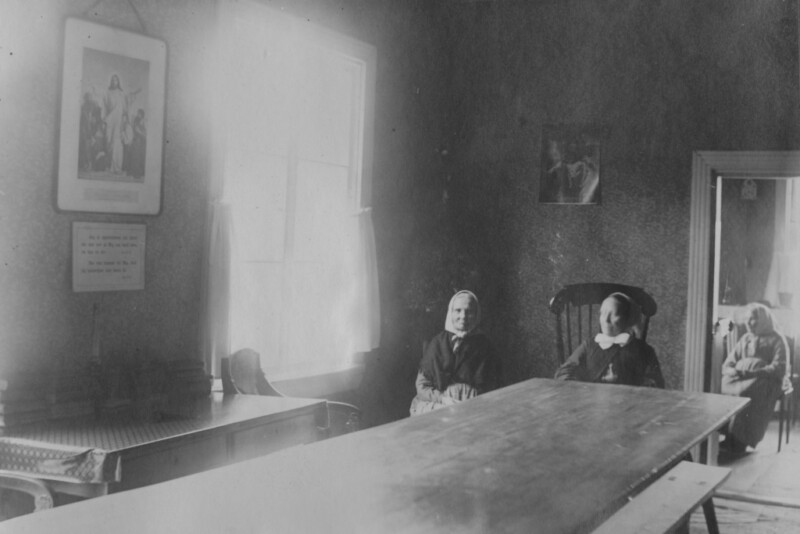
- Nursing home for elderly service personnel 1861-1865. After 1867, the nursing home became one of the working methods of the Helsinki Deaconess Foundation. The home had to move to Dalsvik Manor after a fire destroyed the nursing home building in 1865.
- A doctor’s reception for poor people from Espoo was held in connection with the nursing home.
- Providing compensated social assistance, that is, helping poor people from Espoo by redeeming crafts they made.
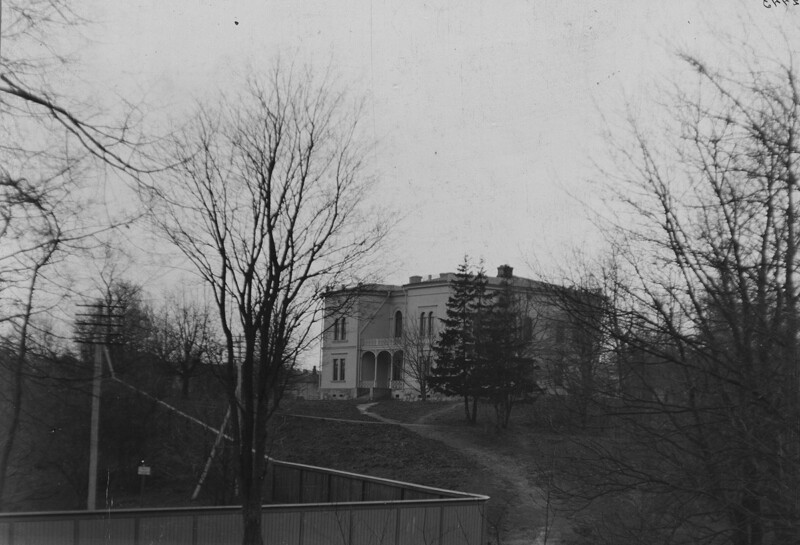
Deaconess Foundation from Hakasalmi villa?
The Hakasalmi villa was built by Aurora’s stepfather Carl Walleen between 1843-1846 on the shore of Töölönlahti. At the end of the 19th century, the shoreline moved further away as the southern part of the bay was filled in for a railway yard. When Aurora settled permanently in Helsinki in 1875 after years abroad, she spent winters here at Hakasalmi. Summers she spent at Träskända manor in Espoo. By the late 1890s, Hakasalmi became her only home, as she gave up her beloved summer residence after accidents affected the estate.
In 1894, Aurora proposed donating the villa to the Helsinki Deaconess Foundation on the condition that the city would be favorable to attaching the adjacent park to the villa lot. With this annexation, Aurora wanted to secure future growth opportunities for the Deaconess Foundation. However, the city was not receptive to this proposal, as the park had already been zoned as a park area. The Deaconess Foundation’s operations were well established and proven beneficial, so the city began searching for an alternative location for a planned new building. It was found on the other side of Töölönlahti in the Eläintarha area, where plots had already been zoned for social purposes.
In 1896, Aurora sold Hakasalmi to the City of Helsinki but retained management rights until her death in 1902. Today, the villa is part of the Helsinki City Museum’s operations.
Aurora Social Activities at Hakasalmi Villa
- Providing financial assistance to those who asked. Aurora held regular consultations.
- For the horses, a watering trough and hay feeding rack were arranged outside the villa’s stone fence. For the truck drivers and market vendors who came from the countryside, there was a room in the downstairs of a villa nearby called Rosa-Villa.

Dalsvik Manor and Deaconesses
Aurora of Dalsvik Manor inherited it from her sister Emilie, who died in 1846. When the old people’s home building that Aurora had established for her elderly servants in Träskända burned down in 1865, the elderly were moved to Dalsvik Manor. One of the courtyard buildings was renovated as a summer home for the sisters of the deaconess institution. In 1895, Aurora sold the Träskända and Dalsvik manors to her sister’s grandchild Marie and her spouse Adolf Törngren. After Aurora’s death in 1902, the old people’s home and the sisters’ summer home were closed. A few elderly still in care at that time were moved to a vacant building in Träskända. The old people’s home’s operations ceased with the death of the last elderly resident in 1909. A new summer retreat was rented for the deaconess sisters from Inkoo.
Dalsvik Manor no longer exists. On the manor’s lands is a recreational area for Espoo residents, where a few stone foundations of buildings remind of the manor’s existence.
Aurora’s social activities at Dalsvik Manor
- Old people’s home from 1865-1902.
- Deaconesses’ summer home until 1902.
Aurora had furnished the summer home and equipped its kitchen. When the summer home had to be given up, the furniture and belongings were moved to the Deaconess Foundation on Alppikatu.
The author Jaana af Hällström works in communications at the Diaconia Institute as an expert and as a curator specializing in the institute’s history.