Published on 30.4.2026
Investing in Roma women means sharing power, resources, and responsibility
The Romani Women’s Futures Forum brought together Roma women activists, institutions, and human rights experts to define what meaningful investment in Roma women and girls should look like. The message was clear: lasting change requires accountable institutions and long-term, participatory investment that shares power, resources, and responsibility.

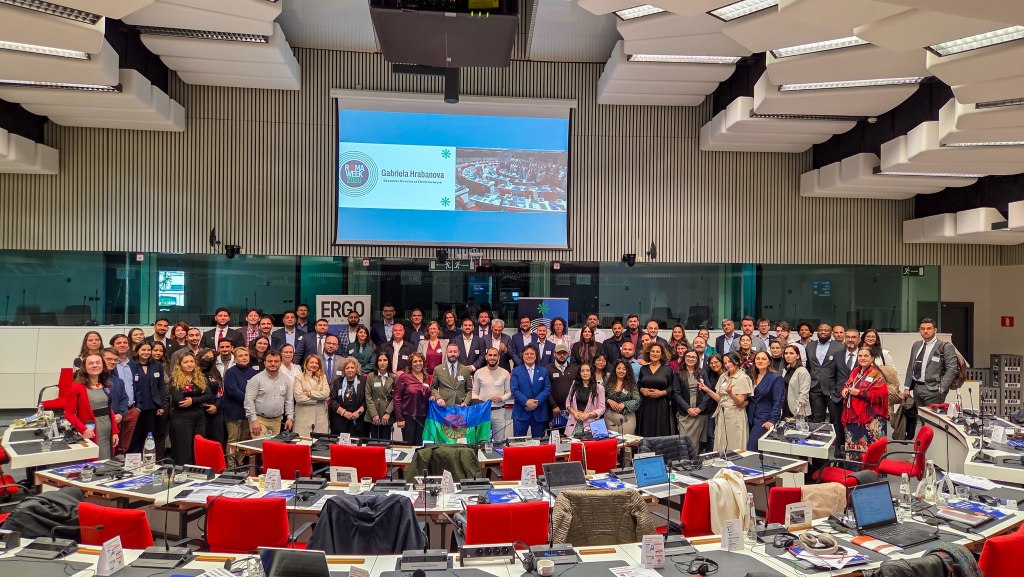
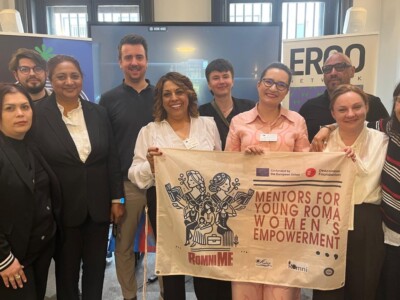
The Romani Women’s Futures Forum, which took place during Roma Week 2026 at the European Parliament, was the RomniME project’s final public event. RomniME is a European cooperation initiative that strengthens the voices, participation, and leadership of Roma women and girls through mentoring, with a focus on intersectional equality, human rights, and structural change.
The Romani Women’s Futures Forum was a political, institutional and community space dedicated to the experiences, demands and future perspectives of Roma women and girls in Europe. Activists, Roma and pro-Roma organisations, representatives of European and international institutions, local administrators and human rights experts were among those who attended the event.
The forum comprised two main panels: “Voices of Today, Futures of Tomorrow”, which explored the experiences of Roma women in various European countries; and “What Does Real Investment in Roma Women and Girls Look Like?”, which examined the concept of genuine investment in Roma women and girls.
Resilience isn’t the answer—accountability is
Mila Paspalanova, from the Office of the United Nations High Commissioner for Human Rights, opened the event. In her opening remarks, she recalled that Roma women are often invisible, even in spaces dedicated to Roma rights, and emphasised that the discrimination they face must be addressed as human rights violations. Violence, trafficking, forced sterilisation, segregation, exclusion and intersectional discrimination are not secondary issues, but rather direct responsibilities of states.
A central point of her speech concerned the language of “resilience.” While Roma women are often described as strong and resilient, they cannot be expected to continue adapting to unjust systems. It is the responsibility of institutions to respect, protect and fulfil human rights.
From school to work to healthcare: barriers that don’t go away
The first panel, moderated by Maja Bova, discussed the challenges experienced by Roma women in Italy, Bulgaria, Romania and Finland. Saška Jovanović, co-founder of ROMNI APS, stressed that the barriers faced by Roma women are not individual problems, but structural obstacles. In education, many Roma girls encounter discrimination, isolation, and unwelcoming school environments, often leading to them dropping out. In employment, discrimination can begin as early as the CV selection stage, because of a surname or residential address. Roma women also often face prejudice and inadequate treatment in healthcare and in their dealings with institutions.
Jovanović also drew attention to the limited presence of Roma women in decision-making spaces. Even when they are involved, it is often merely symbolic, with no real power. For this reason, it is not enough to talk about inclusion; what is needed is genuine participation, recognition and access to power.
Miglena Mihailova,highlighted the connection between poverty, exclusion, gender and ethnicity. Many Roma women do not complete their basic education, struggle to access formal employment and experience strong economic dependency. According to Mihailova, these challenges should not be seen as a “Roma problem,” but rather as a political and institutional issue concerning the way the states function.
Daniela Ilinca Ionita examined the situation in Italy, denouncing the stereotypes that affect Roma women, who are often portrayed as criminals, inadequate mothers or passive victims. These images have real-life consequences, reinforcing control policies instead of inclusion pathways. She also emphasised the lack of cultural competence in public services, which often fail to support Roma women adequately.
Anca Enache from the Deaconess Foundation highlighted the voices of young Roma women, recalling their desire to be taken seriously and to participate and contribute to society. She identified the creation of safer spaces, mentoring pathways, access to higher education and concrete opportunities for new generations as key priorities.
What “real investment” means—beyond the funding line
The second panel, moderated by Robert Rustem of the Council of Europe’s European Commission against Racism and Intolerance (ECRI), focused on what it really means to invest in Roma women and girls. The starting point was clear: investment means more than just funding; it also involves guaranteeing participation, trust, representation, safety and structural change.
Pär Löfstrand, from the Municipal Council of Östersund and the European Committee of the Regions, emphasised the importance of the local level. Rights only become real when they translate into access to education, housing, healthcare, work and everyday dignity. European strategies exist, but the main problem remains their practical implementation.
Carmen Gheorghe, from E-Romnja, provided a Roma feminist and intersectional perspective. She explained that Roma women experience various forms of oppression linked to gender, ethnicity, poverty, social class, religion, sexual orientation and access to services. For this reason, policies must be based on the experiences of the most marginalised women. Gheorghe called for direct investment in grassroots organisations led by Roma women, because providing them with resources recognises their autonomy, expertise and decision-making power.
Višnja Baćanović, from UN Women, highlighted the role of Roma women activists as drivers of social transformation. These activists build trust, support girls and women within local communities, create networks, and effect deep change. Investing in them strengthens social capital, leadership and participation.
The bottom line: power-sharing, participation, long-term support
Several key themes emerged from the forum, including structural and intersectional discrimination, the gap between strategies and implementation, the pivotal role of organisations led by Roma women, the importance of mentoring, the necessity of genuine, non-symbolic participation, and the need for stable, long-term funding.
The final message of the Romani Women’s Futures Forum is clear: the issue is not to make Roma women more resilient, but to make institutions more accountable. Formal inclusion is not enough: power, resources, and decisions must be shared.
Roma women are already protagonists of change: they build networks, support families, accompany girls, denounce discrimination, and transform communities. What is needed now is real, intersectional, participatory, and long-term investment, capable of producing concrete changes in people’s lives. Only then will it be possible to move from formal inclusion to a truly just democracy.
The article was written by the association Romni APS from Italy. Romni is one of the organisations implementing the RomniME project coordinated by the Deaconess Foundation. The project aims to develop a model based on community work and mentoring to improve the well-being and inclusion of young Roma women. The project, which is taking place in Finland, Bulgaria, Italy and Croatia, also aims to identify and combat discrimination experienced by Roma women and girls by improving understanding of the impact of multiple discrimination. The project is co-funded by the Citizens, Equality, Rights and Values Programme (CERV) of the European Union.