Published on 8.5.2026
Security, competitiveness, and human dignity go hand in hand: Lessons from Roma Week
Roma Week 2026 brought policymakers, civil society and Roma activists to the European Parliament at a critical moment for Europe. As debates on the EU’s future budget, security and enlargement intensify, the week highlighted a clear message: Europe’s resilience and prosperity depend on dignity, equality and meaningful inclusion for all.

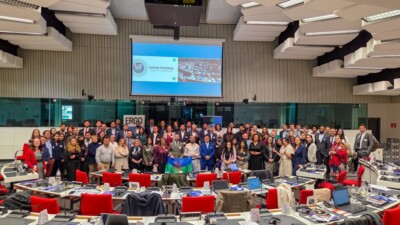
Each year in April–May, Members of the European Parliament, representatives of the European Commission and other European institutions, as well as national authorities, NGOs and activists from across Europe, gather at the European Parliament to mark Roma Day on 8 April. This commemoration provides an opportunity to reflect on the situation of Roma people in Europe and to recognise, celebrate the rich cultural heritage and contributions of Roma communities and citizens, as well as raising awareness of them.
It is also a time to assess the efforts of various stakeholders to promote lives of dignity for one of Europe’s most historically oppressed communities and to identify what further actions and partnerships are needed. Roma Week offers a shared space in which to reflect on policy frameworks and lived realities, and on the practical requirements for meaningful change.
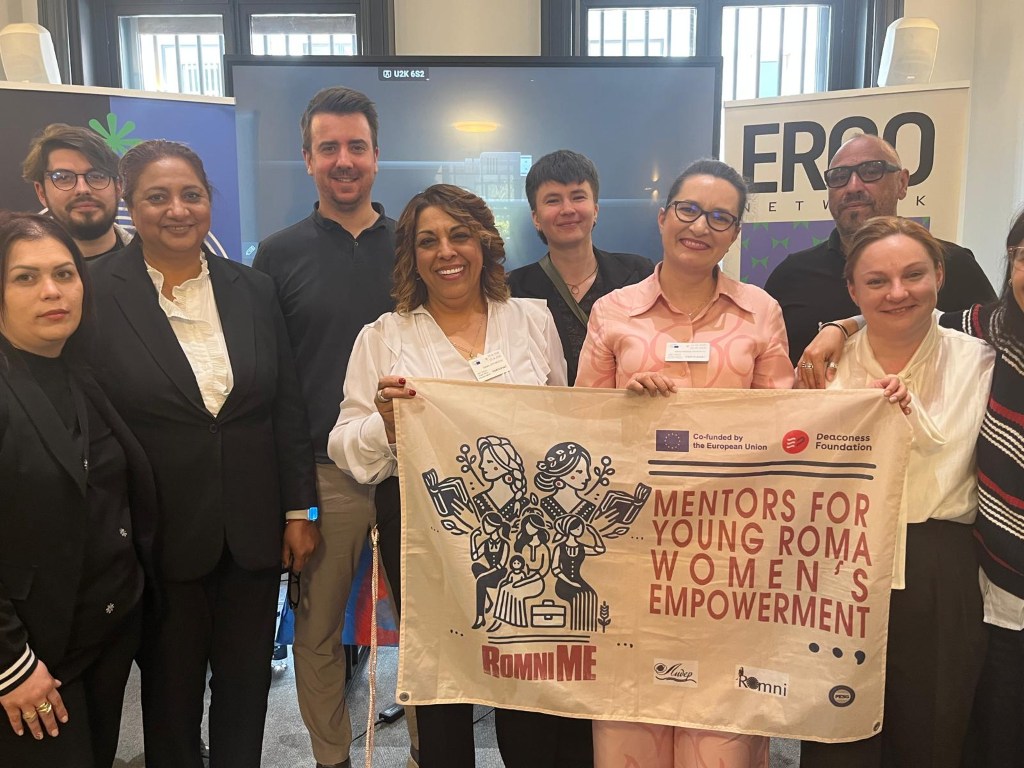
For many years, Roma Week has been an important forum for the Deaconess Foundation to connect with colleagues from across Europe and to engage in dialogue with representatives of the European Commission and the European Parliament. We integrate the knowledge gained from our encounters and long-term co-operation with Roma minorities and communities into decision-making processes. This year, we also organised an event focusing on ways to support Roma women and girls, which is a central theme of our Mentors for Young Roma Women’s Empowerment – RomniME project.
Over the course of three intensive days, Roma Week 2026 discussions were particularly shaped by a sense of urgency. Europe is entering a new budgetary cycle while also facing growing concerns about global insecurity, European competitiveness, and increasing poverty among its citizens. Against this backdrop, the week provided an opportunity to highlight the most pressing political messages and priorities across institutions and civil society.
The following six key messages emerged from the discussions:
1. EU funding priorities are about security, and security is about people
One of the key topics of discussion was the next EU funding period (2028–2034). There was a clear tension between competing priorities: competitiveness, defence and security versus social cohesion, equality and human rights.
Civil society representatives repeatedly stressed that security cannot be achieved solely with military or economic measures. Speakers from Roma civil society organisations emphasised that access to education, housing, healthcare, and protection from discrimination are core elements of human security. They pointed out that neglecting these dimensions ultimately undermines Europe’s social resilience. Participation, equality and dignity are therefore fundamental to human security. Societies become more resilient when people experience inclusion and trust. From this perspective, investments in social rights, anti-poverty measures, and equality policies are not secondary – they are essential to all.
2. Targeted measures still matter – mainstreaming alone is not enough
A recurring theme was the balance between mainstream social policies and targeted measures for Roma communities. While inclusive public services for all are essential, there is a real risk of overgeneralisation if targeted Roma-specific work is abandoned.
Experience and evidence shared during the week showed clearly that Roma-focused initiatives remain necessary, especially to address structural antigypsyism and accumulated disadvantages. Both approaches are needed: strong universal services and well-designed, targeted measures that recognise specific realities and differences rather than erasing them.
This also links to the idea of conviviality: everyone needs their own safe environments, but also shared spaces where different groups, people and realities come together as equals.
3. Strategies are not enough without communities and concrete action
The European Commission has announced that it will publish a new Social Package, which will include anti-poverty strategies and recommendations on issues such as affordable housing. This was widely welcomed as an important step, providing member states more tools and guidance than before.
At the same time, however, discussions emphasised that strategies alone do not change realities. Participants underlined that while the EU sets strategic frameworks and funding priorities, responsibility for implementation lies primarily with member states and municipalities. Ultimately, it is their political will, legislation and the practical delivery of public services that determine whether European commitments translate into real, lived change.
Implementation depends on national legislation, public services, and – crucially – community-level work. Initiatives like RomniME demonstrate how European-level commitments become meaningful only when they translate into concrete actions that people recognise in their everyday lives. Organisations and public actors alike must take responsibility for generating impact at the individual, community, national and European levels.
4. Reconciliation requires responsibility, repair, and resources
Another powerful discussion focused on transitional justice and reconciliation, drawing on Germany’s experiences as an example. While Germany has taken steps toward formal recognition and reparative measures, similar reconciliation processes remain limited or fragmented in most other European countries. This highlights a broader gap between acknowledgement and action across the EU.
Participants stressed that reconciliation involves more than just recognising historical truth or issuing apologies. Real reconciliation also requires material redress. Past injustices have caused long-term social, economic and cultural harm, which cannot be addressed without resources and accountability. This is not about charity, but about duty: states and institutions have an obligation to repair the damage they have caused. Recognition must lead somewhere – to structural change, investment, and justice.
5. Roma women and girls remain underfunded – despite proven impact
A strong message concerned Roma women and girls, whose leadership and expertise are increasingly recognised, yet whose work remains underresourced and often overlooked in funding priorities. This further highlights the evidence from the RomniME project, which highlights that inequality is not abstract but deeply rooted in everyday experiences.
The results of the RomniME project, including the Romani Women’s Futures Forum, our own event held during Roma Week, showed that when Roma women gain agency, the impact reaches families, communities and institutions. The majority of the project’s young Roma women participants reported concrete improvements in self-confidence, educational aspirations and engagement with institutions, demonstrating the tangible impact of sustained investment in Roma women’s leadership.
However, access to sustainable funding for Roma women remains a major challenge. Addressing this gap is not only a question of gender equality but of democratic participation and societal transformation. It is a necessary step towards democracy, social cohesion and lasting equality. Roma women shape their societies, and their agency is urgently needed.
6. Countries in the Western Balkans and Eastern Europe play a vital role in European democracy and security
Discussions during the week emphasised that, while inequalities affecting Roma communities in these regions persist, there have also been important advances in policy and rights. These countries are key partners in shaping the EU’s future; their stability, democratic development and respect for human rights are directly linked to EU’s own security, minority rights and resilience. Participants emphasised that Roma inclusion in the Western Balkans and Eastern Europe is closely linked to EU enlargement and neighbourhood policies, as progress on minority rights, the rule of law and social inclusion remain key benchmarks for accession processes and partnerships with the EU.
Supporting Roma inclusion in these regions is not only a human rights imperative, but also a strategic investment in social cohesion and equality. This requires long-term commitment and more consistent alignment between EU policies and local realities.
Looking forward
Roma Week 2026 once again demonstrated the strength, knowledge, and determination of Roma civil society, as well as highlighting the gap that still remains between political commitments and lived equality. Looking ahead, Roma Week 2026 calls on European institutions, member states and partners to turn commitments into sustained funding, accountable implementation and meaningful partnerships with Roma communities. This will ensure that policies lead to real and lasting improvements in people’s lives.
As the Deaconess Foundation, we will continue to stand with Eastern European Roma in Finland and to work with institutions and civil society in Romania, Kosovo, Ukraine, Belarus, Bulgaria, Serbia, Croatia, North Macedonia, Italy and Moldova to ensure that every person and community has the right to human dignity. At the same time, we will further strengthen our partnerships with European institutions and other stakeholders to address future challenges together.
Equality, dignity, and justice require sustained commitment, shared responsibility, and trust.
By Anca Enache, Maria Dorofte, Marjaana Toiviainen
Mentors for Young Roma Women’s Empowerment – RomniME project, a mentoring programme for young Roma women, has been co-financed by European Commission (Citizens, Equality, Rights, Values – CERV programme).