Published on 2.10.2026
Work, reconciliation and participation: Lasting change for tens of thousands
Between 2022 and 2025, the Deaconess Foundation’s development cooperation programme supported more than 87,000 people in vulnerable situations in East Africa and Eastern Europe. The results can be seen in the form of new livelihood opportunities, and stronger realisation of rights, and in local communities building peace.

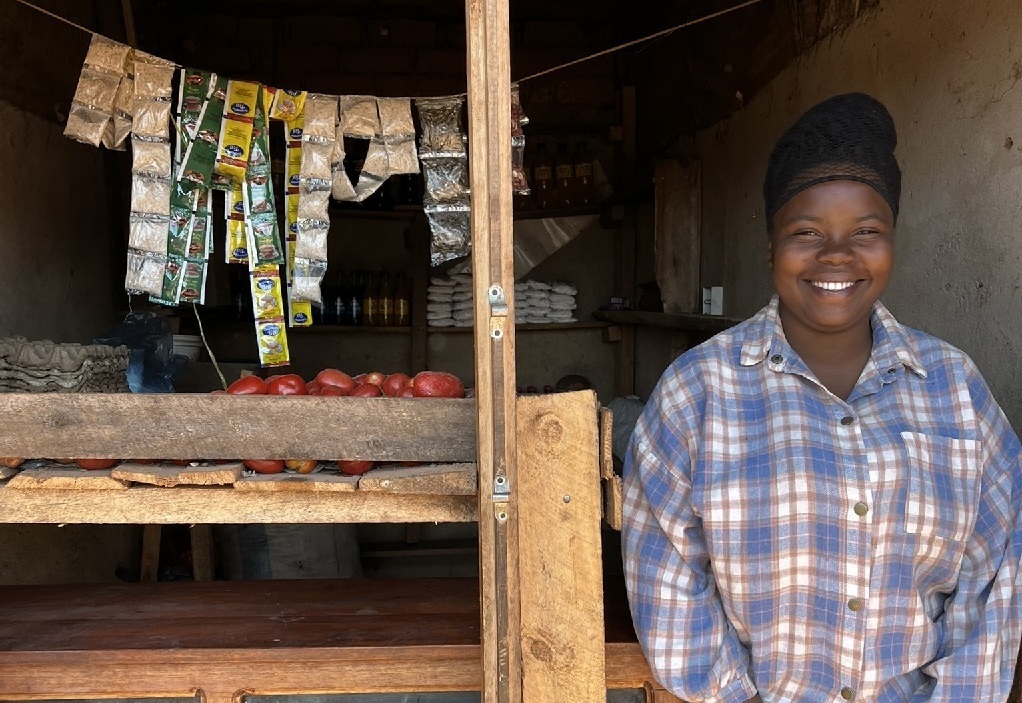
In the village of Ikanga in Tanzania, shop owner Cristina Dugange knows what her customers need. Among other things, she sells sacks of charcoal, sugar cane and lemonade. The 21-year-old entrepreneur now wants to expand her range.
Dugange has built her business with determination after taking part in entrepreneurship training and a work placement in a stationery shop, organised by the Deaconess Foundation’s partner organisation, the Foxes Community and Wildlife Trust. Within a few years, her income has tripled.
“Some young people in our village have difficulty earning enough to get by. The problem particularly affects those whose parents have died, whose families are also poor or who have had to drop out of school for various reasons,” says Morris Gandye, Chair of the Ikanga village council.
Cristina, too, became pregnant young and had to leave school, as the Tanzanian Ministry of Education’s guidelines at the time prohibited pregnant girls from continuing their studies.
“Now that the young people in the most difficult circumstances have gained vocational skills and entrepreneurship training, their improved status is also evident in the fact that the number of underage girls becoming pregnant in our village has fallen,” says Gandye. Poverty and a lack of prospects are key factors that make teenage pregnancy more likely.
Pathways to livelihoods
Cristina’s improved livelihood and the decline in teenage pregnancies in Ikanga are examples of the change that the Deaconess Foundation’s development cooperation programme has helped to make possible. Over four years, the programme supported more than 87,000 people in difficult circumstances in Eastern Europe and Eastern Africa.
More than 2,000 of them found work, set up their own business, or found another sustainable source of livelihood. Many who set up their own businesses have also been able to employ others in difficult situations or train them.
According to the programme’s results report, many employers also committed to more equal recruitment than before.
“I see my future full of opportunities”
However, stronger livelihoods were only part of the change. For many participants, the most important effect was belief in their own potential: 94 per cent said their self-esteem had grown stronger and 91 per cent said they felt more confident about the future. At the same time, a growing number were actively participating in their own communities.
A young woman from Ethiopia describes the programme’s effects on her life as follows:
“The biggest change brought about by the programme is independence, both financial and emotional. I’ve discovered my voice, my creative power, and my ability to turn a traditional skill into a meaningful livelihood. The support from the programme has taught me that women can lead, create, and inspire while supporting one another. I now see a future full of possibilities with no limitation.“
In some situations, this stronger belief in future opportunities has had very concrete consequences. In the Horn of Africa, for example, youth unemployment is high, and human traffickers exploit the situation to lure young people onto the dangerous journey towards Europe in the hope of better livelihoods. Greater confidence in one’s own prospects can reduce the risk of leaving, as in the case of this young person:
“This project made me give up my plan to set off on the dangerous tahriib journey. It also gave me hope that girls can build a good life and succeed in their own country when they work hard and do not give up in the face of difficulties.”
The programme particularly sought to support the most vulnerable people, such as members of minorities, people with disabilities, young people in challenging circumstances and those affected by conflict. Many of them had faced discrimination on a daily basis. It was therefore especially important that the programme’s participants gained more information about their rights and how to defend them. The effects of the work extended even to some participants’ self-image:
“The biggest change is in how I see myself. I am a person with a disability, and I have faced a great deal of prejudice and discrimination. Now I see myself as a strong, valuable person who deserves better.”
Participation and rights
The change brought about by the programme did not remain limited to the everyday lives of individuals. Laws, services and the practices of the authorities also became more equal in many places.
The organisations carrying out the practical work contributed to the development of 30 laws, strategies and other policies in a more equal direction.
In Kosovo, for example, the Deaconess Foundation’s partner organisation Voice of Roma, Ashkali and Egyptians took part in the reform of the anti-discrimination law. More than 80 per cent of the foundation’s recommendations were included in the revised legislation. The new law recognises discrimination against Roma more clearly than before and strengthens action against hate speech and hate crimes. The changes improved the legal position of minority communities.
Thanks to training and dialogue, the services provided by the authorities became more accessible in many countries and took better account of people in difficult situations.
At the same time, a growing number of people belonging to minorities or otherwise facing discrimination took part in developing their communities, in dialogue with the authorities and in decision-making. They also gained information about their rights and how to defend them.
Participation did not stop at being heard but in many places also led to actual changes in people’s everyday lives, as a participant from Eastern Europe belonging to the Roma minority describes:
“I live in a Roma neighbourhood where we have long had to face ethnic profiling by the police. Thanks to the training and the support of lawyers and other experts, we have learned how to deal with the authorities and the police. We have also achieved concrete improvements in our neighbourhood, such as a bus stop, a paved road and new shops.”
Many participants described the most significant change as being that they now have the confidence to speak out.
“I now understand my rights better and know where to get help when I need it. I feel more confident about intervening in cases of injustice.”
Insider reconcilers build trust and lasting peace in communities
Building reconciliation and providing psychosocial support to people affected by conflict were an important part of the development cooperation programme in the Horn of Africa, where the security situation is fragile.
Between 2022 and 2025, more than 700 trained insider reconcilers took part in over a hundred peace and reconciliation processes in East Africa. One of them is Mary from South Sudan.
In her home country, tensions at national and regional level periodically erupt locally as violence between communities. It is therefore crucial for peace that people find ways to deal with conflicts and build trust in their own communities.
In Mary’s home village, ethnic conflict destroyed homes, broke up families and eroded trust between people. After receiving mediation training, Mary, together with other insider reconcilers, began bringing people together for dialogue. At first, many were afraid to talk about their experiences, but gradually their shared grief laid the foundation for trust to return.
Through regular discussions, the villagers were once again able to work together and agree on common goals. Homes were rebuilt, the school was reopened, and communal life began to return to normal.
“We have learned to see one another as brothers and sisters again. Dialogue gave us hope and the courage to rebuild our lives together,” says Mary.
Change leads towards a more equal future
“Overall, the programme strengthened the ability of the most vulnerable people to influence their own lives and their societies. At the same time, local organisations strengthened their position as advocates for their communities and as builders of social change,” says Anca Enache, head of international work at the Deaconess Foundation.
Ultimately, the most important result of the development cooperation programme is not reflected in statistics. It shows in the fact that a growing number of people dare to speak out, demand their rights and take part in developing their communities. Stronger participation and trust build more just and peaceful societies.
Between 2022 and 2025, the Deaconess Foundation’s partner organisations implemented the Equal, Inclusive and Peaceful Societies development cooperation programme in East Africa and Eastern Europe. The programme was supported by development cooperation funding from the Ministry for Foreign Affairs of Finland.